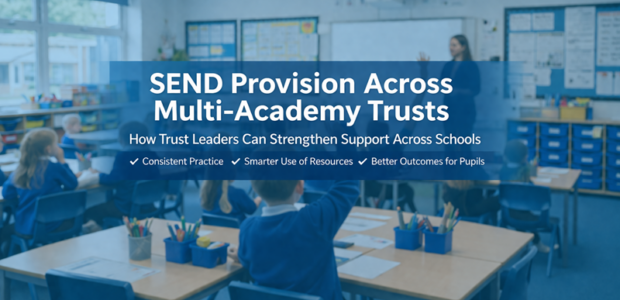
As Multi Academy Trusts continue to grow, so does the complexity of delivering consistent, high quality SEND provision across all schools.
Many MAT leaders are now facing the same challenge: How do we ensure every school is delivering effective, evidence based support, while maintaining cost efficiency and clear accountability?
Speech, language and communication needs (SLCN) sit at the heart of this challenge.
They impact learning, behaviour, attainment and inclusion, yet provision often varies significantly between schools.
This is where a trust wide approach becomes essential.
The Challenge: Inconsistency Across Schools
In many MATs, SEND provision has developed organically at school level. This often leads to:
- Variation in quality of speech and language support
- Different intervention approaches across schools
- Uneven staff confidence and training
- Inconsistent assessment and reporting
- Difficulty evidencing impact at trust level
While individual schools may be working hard, the overall picture can lack cohesion.
Why Speech & Language Should Be a Trust-Level Priority
Speech, language and communication underpin:
- Literacy and writing outcomes
- Classroom engagement and behaviour
- Access to the curriculum
- Social interaction and wellbeing
Without a structured approach, pupils with SLCN risk falling behind across multiple areas.
For MATs, this creates:
- Increased demand for specialist support
- Greater pressure on SEND budgets
- Challenges in demonstrating impact to trustees, Ofsted and local authorities
Moving from School Level Support to Trust-Wide Strategy
The most effective MATs are now shifting from individual school led provision to a coordinated, trust-wide SEND strategy
This doesn’t mean removing flexibility, it means creating consistency where it matters most.
Aligning with National Policy: Why This Matters Now
Recent national developments, including the Department for Education’s focus on inclusion and evolving Schools White Paper priorities, alongside the ongoing National Curriculum review, are placing increasing emphasis on:
- Early identification of need
- Inclusive classroom practice
- Stronger literacy and communication outcomes
- Consistency of provision across schools
- Evidence based interventions
For Multi Academy Trusts, this creates both a challenge and an opportunity.
The challenge is ensuring that provision is:
- Consistent across all schools
- Clearly evidenced
- Aligned with national expectations
The opportunity is to take a proactive, trust-wide approach that not only meets these expectations but strengthens outcomes across the board.
Speech, language and communication sits at the centre of these priorities.
A structured, trust-wide model enables MATs to:
- Support early language development
- Improve access to the curriculum
- Strengthen literacy outcomes
- Deliver inclusive, classroom-based support
- Demonstrate impact at both school and trust level
As expectations continue to evolve, MATs that embed a clear, scalable communication strategy will be best placed to respond confidently and effectively.
What a Strong Trust Wide Model Looks Like
1. Baseline Understanding Across the Trust
A clear picture of need is essential.
This includes:
- Baseline communication assessments
- Identification of high need cohorts
- Mapping provision across schools
This allows MAT leaders to make informed, strategic decisions.
2. A Consistent Intervention Framework
Rather than multiple disconnected approaches, MATs benefit from:
- A shared set of evidence based interventions
- Clear guidance on when and how to use them
- Consistency across schools and year groups
Approaches such as Colourful Semantics provide a structured way to support sentence development, language and writing and can be implemented at scale.
3. Workforce Development at Scale
Staff confidence is one of the biggest drivers of impact.
A trust-wide CPD model can:
- Equip teachers and TAs with practical strategies
- Improve consistency across classrooms
- Reduce reliance on specialist pull-out interventions
Training delivered across the MAT ensures that all staff are working in the same way.
4. Flexible Delivery Models
MATs are increasingly moving away from rigid models towards flexible provision such as:
- Shared therapist time across schools
- Targeted assessment and intervention blocks
- Remote and online support
- Blended models combining therapy and training
This allows trusts to:
- Maximise impact
- Control costs
- Respond to changing needs
5. Clear Impact Tracking and Reporting
Trust leaders need to evidence outcomes.
A strong model includes:
- Measurable targets
- Progress tracking across schools
- Clear reporting for senior leaders and trustees
This strengthens accountability and supports inspection readiness.
Cost Efficiency Without Compromising Quality
One of the key advantages of a trust wide approach is financial.
Instead of:
- Multiple small contracts
- Reactive spending
- High agency costs
MATs can:
- Pool budgets
- Share expertise across schools
- Invest in scalable training and systems
This leads to better outcomes at a lower overall cost.
Supporting Diverse and Growing School Communities
With increasing numbers of pupils with:
- SEND
- English as an Additional Language
- Complex communication needs
A consistent, structured approach becomes even more critical.
Whole-class strategies and scalable interventions ensure that support is:
- Inclusive
- Practical
- Sustainable
The Key Shift: From Reactive to Strategic
The most successful MATs are those that move from responding to individual cases to planning proactively at trust level
This shift enables:
- Better outcomes for pupils
- Greater staff confidence
- More efficient use of resources
- Stronger alignment with national expectations
How We Can Support
At Integrated Treatment Services, we support schools and Multi Academy Trusts to develop and deliver effective, scalable speech and language provision.
Our support includes:
- Trust wide communication audits and strategy development
- Speech and language assessments
- Targeted therapy and intervention
- Whole school and MAT wide training (including Colourful Semantics)
- Ongoing impact tracking and reporting
Whether you are looking to strengthen provision within individual schools or develop a coordinated trust wide approach, we can support you in planning the next steps.