What Has Been Announced and What It Means for Schools and MATs
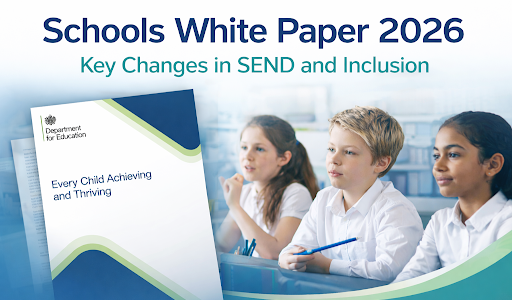
The Government has now published Every Child Achieving and Thriving, setting out proposed reforms to education and the SEND system in England.
This paper marks a significant shift in direction. However, it is important to distinguish between:
- What has been confirmed
- What is proposed; and subject to consultation
- What remains unclear
Below is a clear summary for school leaders, MATs and SEND teams.
What Has Been Confirmed
Investment
The Government has committed £4 billion towards SEND reform, including funding intended to strengthen mainstream inclusion and specialist capacity.
Greater Emphasis on Mainstream Inclusion
The White Paper sets out a clear policy direction:
- More children supported effectively within mainstream settings
- Stronger expectations on schools to meet a wider range of needs
- Expanded access to specialist expertise
Focus on Early Identification
There is a clear emphasis on:
- Earlier intervention
- Speech, language and communication needs (SLCN)
- Reducing escalation to crisis or statutory processes
The policy narrative strongly promotes “inclusion by design” rather than reactive provision.
What Is Proposed (Subject to Consultation)
The White Paper outlines proposals that will now enter consultation:
Individual Support Plans (ISPs)
A new tiered model of SEND support is proposed, including Individual Support Plans for many children who would previously have accessed support through other mechanisms
EHCP Threshold Changes
EHCPs would remain for children with the most complex needs.
The consultation will explore how eligibility thresholds and statutory protections operate within this revised system.
Structural Delivery Changes
There are proposals around:
- Increased school-led support planning
- Access to specialist professionals through new national frameworks
- Clearer minimum expectations of mainstream provision
These proposals are not yet law and may change following consultation.
What is Still Unclear
At this stage, there is limited detail on:
- The precise legal status of ISPs
- Appeal mechanisms for non EHCP pupils
- Transition arrangements for existing EHCPs
- Implementation timelines
- Workforce capacity and commissioning models
- Funding distribution methodology across regions
These areas will require further guidance.
What This Means for Schools and MATs
Regardless of final legislation, the direction of travel is clear.
Schools
- Greater responsibility for early SEND planning
- Increased expectation of evidence based graduated response
- Stronger need for staff confidence in adaptive teaching
MATs
- Trust-wide SEND governance will become more critical
- Consistency across schools will matter
- Clear operational models for inclusion will be essential
This is less about compliance and more about system design.
What This Means for Speech and Language Support
The White Paper repeatedly references early intervention and specialist input.
For speech, language and communication:
- Earlier identification is likely to be prioritised.
- Specialist advice may become more embedded within school systems.
- Access to support may no longer rely solely on statutory pathways.
However, workforce planning and delivery structures remain to be clarified.
The Bigger Picture
The reform signals a move:
from: a predominantly statutory, EHCP led model
toward: a mainstream-led inclusion model supported by specialist expertise
The ambition is to reduce delay, improve equity, and strengthen early support
Whether that ambition translates into practice will depend on:
- Clarity of implementation
- Workforce capacity
- Partnership between education and health
- Ongoing protection of children’s rights
For now, the most important step is understanding, not reacting.
As further guidance and consultation detail emerge, schools and trusts will need to consider how their current SEND models align with the direction set out in this White Paper.