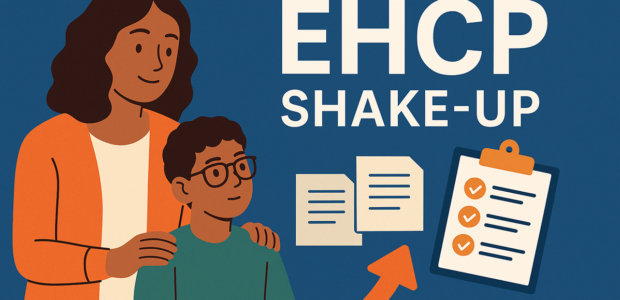
“EHCP” means Education, Health & Care Plan. This is a legal document in England setting out what support a child or young person (0-25) with special educational needs or disabilities (SEND) is entitled to.
Recent changes / proposals include:
- Growing concern that the EHCP system is unsustainable: the number of EHCPs has risen sharply. In January 2024 there were ~ 576,000 children with EHCPs, up ~140% since 2015. The Guardian+3Local Government Association+3ITVX+3
- At the same time, there are ~1.2 million children in schools identified as having SEN support needs below the EHCP threshold. Local Government Association
- The government is considering reforms that might narrow eligibility for EHCPs (so only those with higher / more complex need qualify) or change how legal rights are defined. SEND Network+3ITVX+3The Guardian+3
- Discussion of replacing or supplementing EHCPs in some areas with SEND units (within mainstream schools) as an alternative model. In such cases, the EHCP legal framework might not apply in the same way. AskEllie.co.uk+2SEND Network+2
- Increased pressure on funding, especially under the “high needs” block of school funding, and a drive to make mainstream provision more inclusive as a way of reducing the burden / cost of specialist support. GOV.UK+2SEND Network+2
So in short: EHCPs may become harder to obtain; some children currently getting EHCPs might be shifted to lower levels of support or alternate models; there’s also more emphasis on early identification, mainstream school support, and possibly changing or augmenting the legal rights in EHCPs.
Discover more about the changes to EHCPs below. If you’re looking for expert guidance on speech and language therapy within the process, reach out today – we are ready to help!
EHCP Process & Reforms — Where We Are and What’s Next
- Legal, enforceable plans (0–25).
- Annual reviews; multi-agency input (education/health/ care).
- High demand and variable wait times.
- Focus on mainstream inclusion and earlier support.
- Local authority pilots and guidance updates.
- Parents/teachers invited to respond.
- Eligibility may tighten; clearer thresholds.
- Greater emphasis on evidence of need and impact.
- Growth of mainstream units & targeted interventions.
- Stronger SEN Support in mainstream (“quality first” teaching).
- Therapy/training integrated into school practice.
- Data-led reviews of progress and provision.
Current vs Proposed Pathways (At-a-Glance)
| Aspect | Current EHCP System | Proposed / Risk Areas |
|---|---|---|
| Eligibility | EHCP for complex/significant needs affecting access to education. | Thresholds may tighten; stronger evidence needed at application. |
| Legal Status | Provision specified in Section F is legally enforceable. | Closer scrutiny of wording; avoid vague terms (“as needed”). |
| Mainstream Support | SEN Support varies by school capacity and training. | Push to strengthen school-led, earlier interventions. |
| Placement | Parental preference considered; specialist options possible. | Growth of mainstream units; tighter criteria for specialist. |
| Funding | High-needs block funds EHCPs; variable local budgets. | Increased emphasis on cost-effective, targeted delivery. |
Top 5 Parent Tips — Quick Checklists
Protect & Progress
- Know the plan: read Sections B & F; fix vague wording.
- Track delivery: log what support happens and outcomes.
- Collect evidence: reports, progress, unmet needs.
- Use your rights: SENDIASS, mediation, tribunal if needed.
- Join up support: school, health & external therapists.
Strengthen SEN Support
- Map needs: what helps/hinders in class and at home.
- Monitor impact: what has been tried; what changed.
- Request EHCNA: apply if progress remains limited.
- Seek early help: targeted groups, therapy advice.
- Stay informed: follow local consultations & updates.
Teacher Quick-Guide: Supporting SEN & EHCP Students
| What to Watch | Teacher Action | Resources |
|---|---|---|
| EHCP updates / reforms | Stay informed via SENCo briefings and training sessions. | Gov.uk SEND pages |
| Student has an EHCP | Read Sections B & F carefully. Follow all specified provision exactly. | EHCP document & SENCo support |
| No EHCP but SEN present | Provide interventions and reasonable adjustments in class. | SENCo guidance / school policy |
| Support missing / insufficient | Document gaps and escalate to SENCo or leadership team. | Internal school reporting process |
| Need training or strategies | Request CPD or external specialist input. | Integrated Treatment Services |
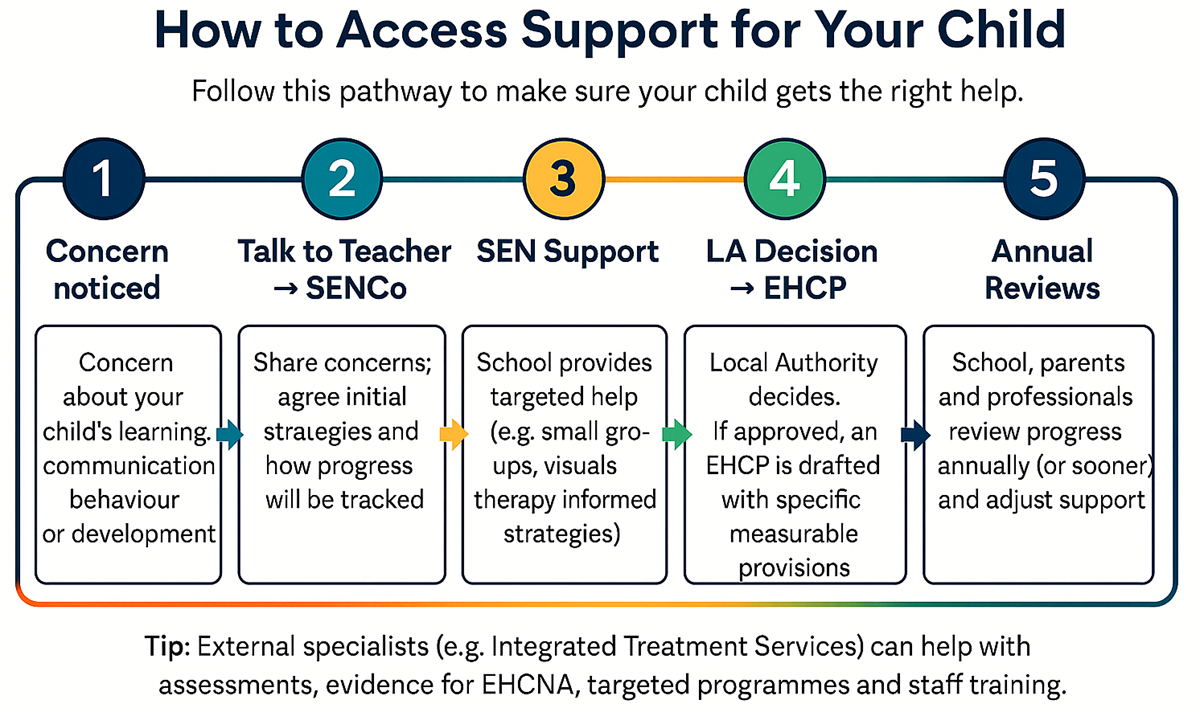
Integrated Treatment Services & how they can help
We offer a range of therapies and assessments (speech & language therapy, occupational therapy, psychological services etc). They can help both parents and schools in the context of these reforms:
- Filling in gaps: When public/LA provision or health services are stretched, we can provide specialist assessments or therapy more quickly.
- Supporting children without EHCPs: Many children whose needs are below the EHCP threshold struggle to access support. We can provide group interventions, training for staff, or targeted programmes even when there is no EHCP.
- Training & consultancy for schools: Helping school staff, SENCo, TAs and teachers understand strategies, use evidence-based approaches, adapt curriculum or class routines.
- Helping with evidence gathering: ITS professionals can produce reports, assessments or evaluations that strengthen applications for EHCPs or reviews of current EHCPs.
- Supporting implementation: Beyond assessment, helping schools/parents carry over the work, ensuring recommendations are possible practically in school and at home.
What to watch out for, potential risks / things to push back on
- Narrowing eligibility for EHCPs might leave children who need support but are not “high/complex enough” more vulnerable.
- Removing or weakening legal rights could make it harder to enforce promised support.
- Variation between regions (“postcode lottery”), some LAs might implement changes in different ways.
- Capacity issues: if mainstream schools are expected to do more but do not have funding, training, staffing, then support may be inconsistent.
- Delays in assessment or implementation remain a problem; these often cost children dearly.
Conclusion
These changes to EHCPs and SEND more broadly are likely to have significant impact. For parents, being informed, collecting evidence and being proactive is more important than ever.
For teachers, clear understanding, good communication and ensuring that what is agreed is delivered will become even more critical.
Need practical, rapid support?
Integrated Treatment Services helps parents and schools with assessments for EHCP applications/reviews, therapy blocks, small-group programmes, and staff training tailored to your setting and budget.